
Feeling stressed at your desk? Your posture and breathing may be playing a bigger role than you realize.
Long hours of sitting, working at a computer, or rushing through a busy day can leave us feeling tense, stiff, and mentally drained. When we're stressed, we often hold tension in our shoulders, adopt a more collapsed posture, and breathe more shallowly.
The good news? A few simple movements and intentional breaths throughout your day can help you feel more relaxed, improve body awareness, and reduce muscle tension.
Here are three easy ways to reset.
1. Reset Your Posture
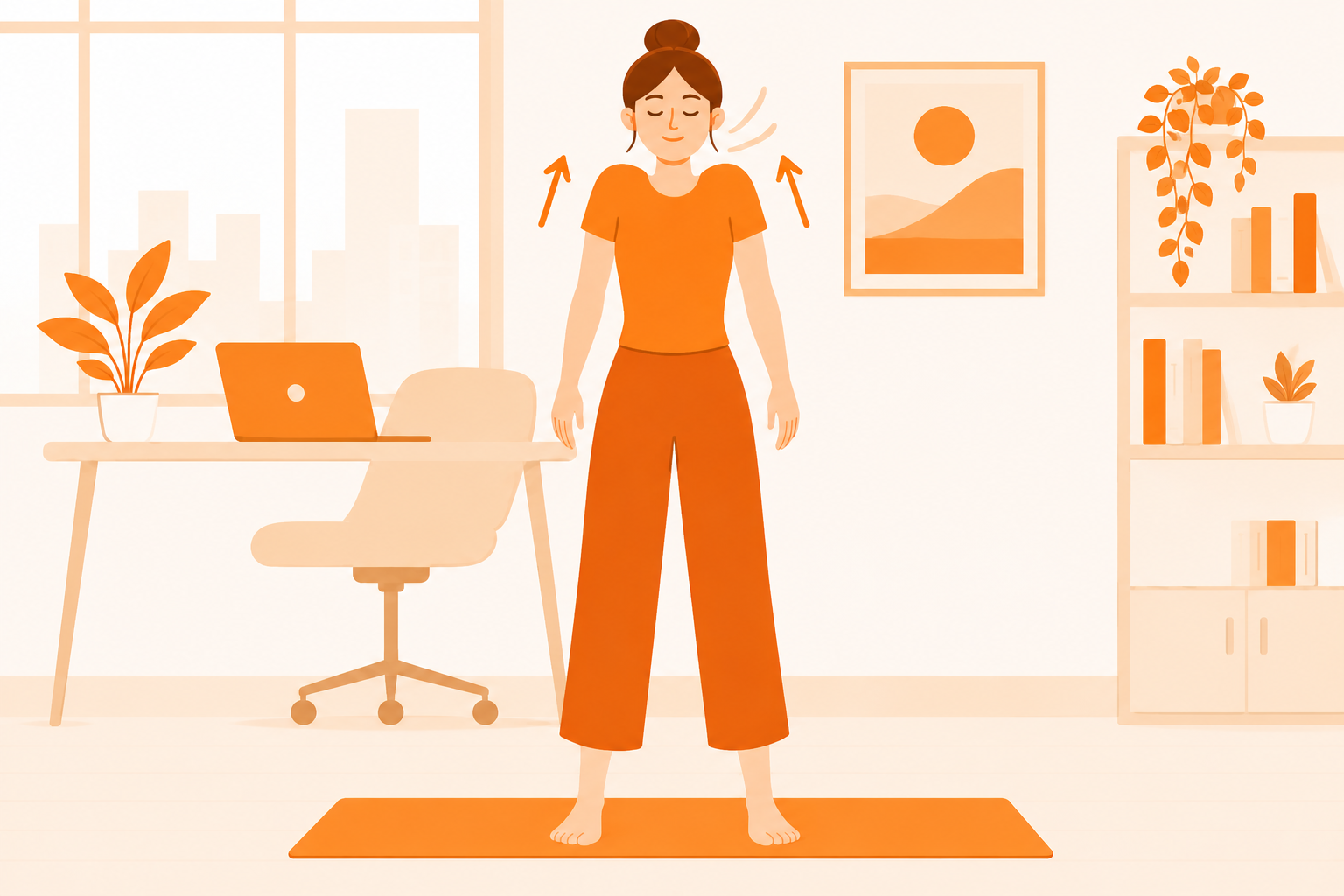
Shoulder Shrugs
Start with a simple shoulder shrug.
Inhale as you gently lift your shoulders toward your ears.
Exhale as you release your shoulders and allow them to relax.
Repeat a few times, noticing how your body feels throughout the day.
Remember, good posture isn't about sitting perfectly straight all day. It's about finding comfortable, open angles, returning to a neutral position when needed, and incorporating a variety of movements throughout your day.
Your best posture is often your next posture!
2. Find Movement — Even While Seated
You don't need to leave your desk to introduce movement into your day.
Try this quick seated yoga flow:
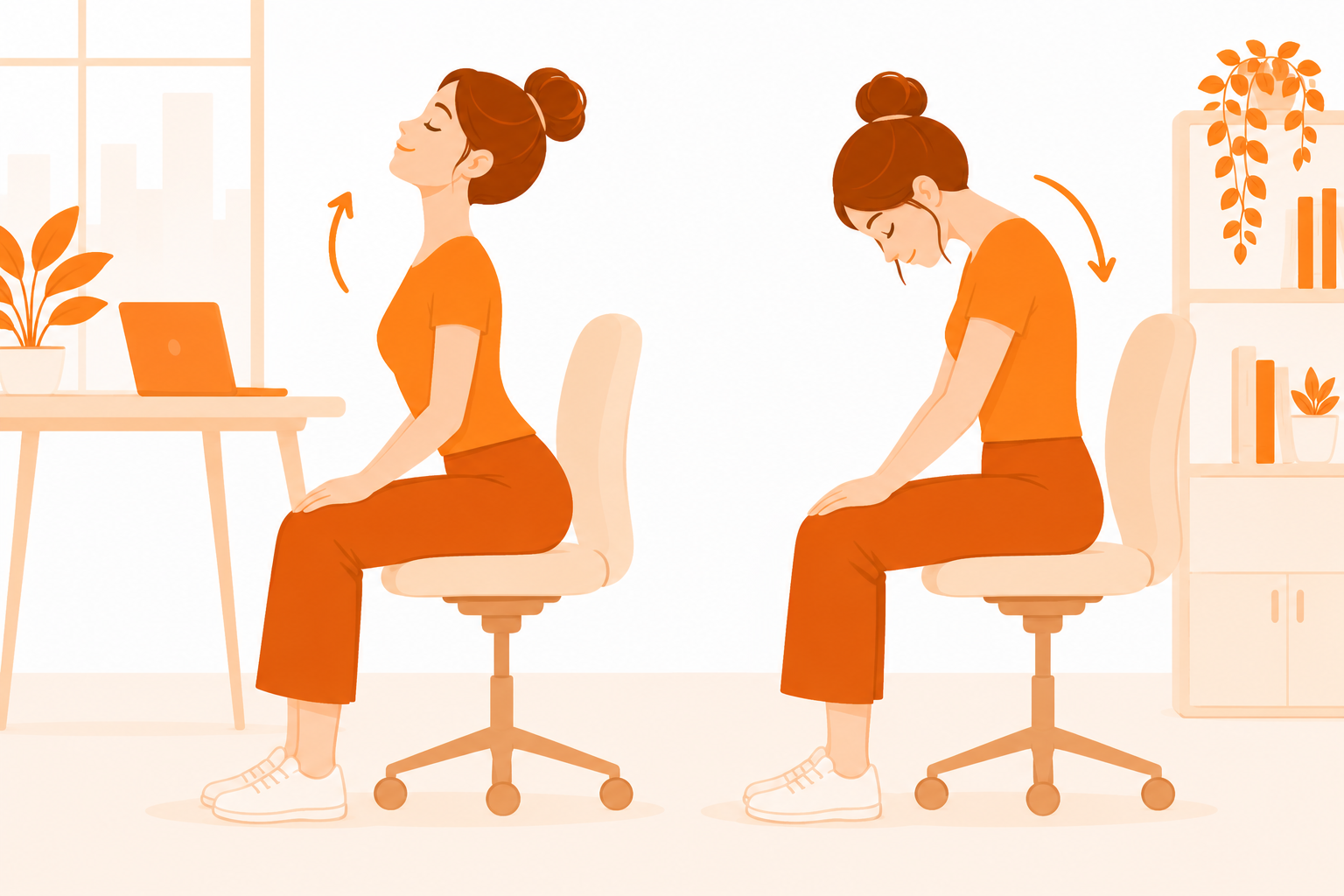
cat/cow
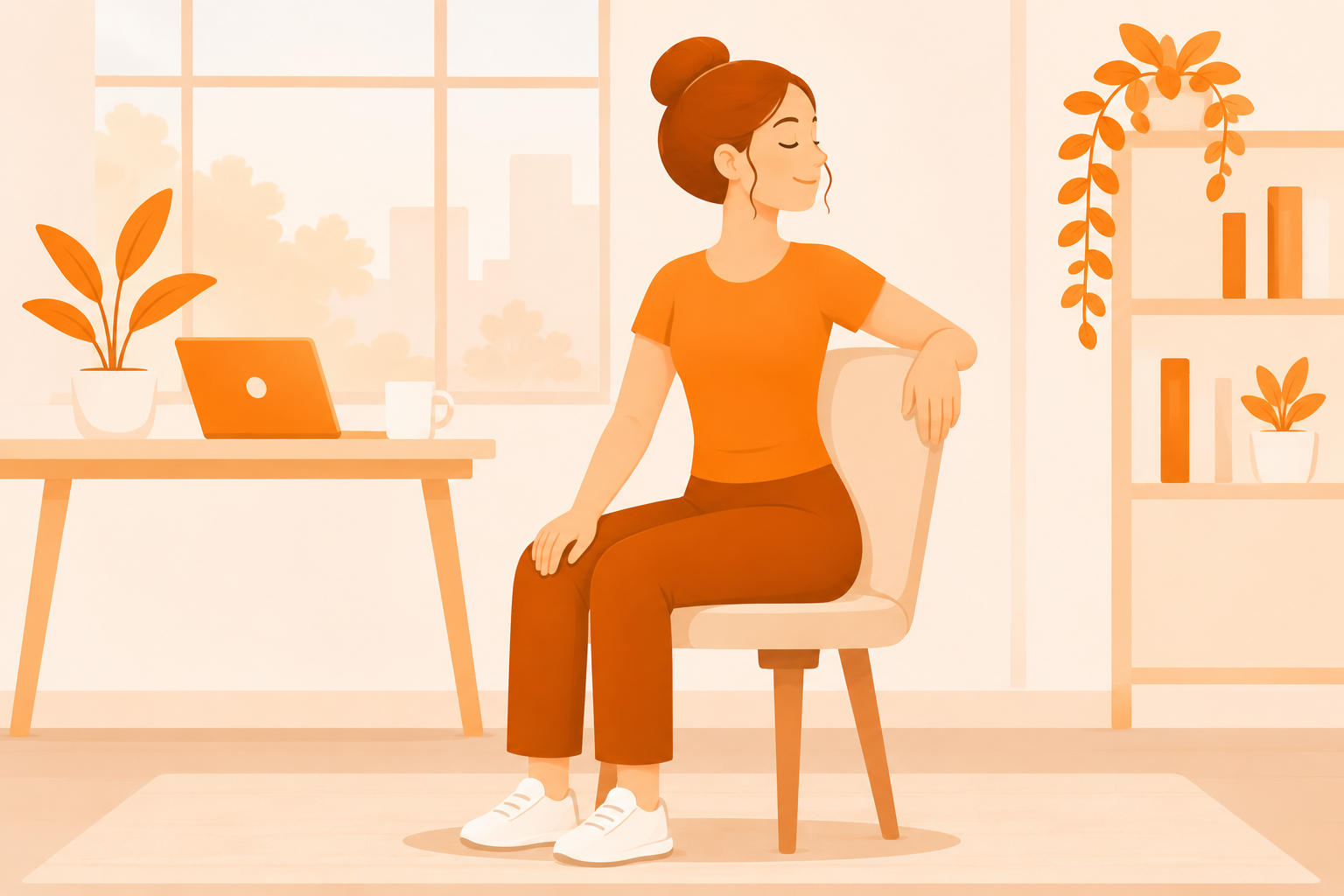
seated twist
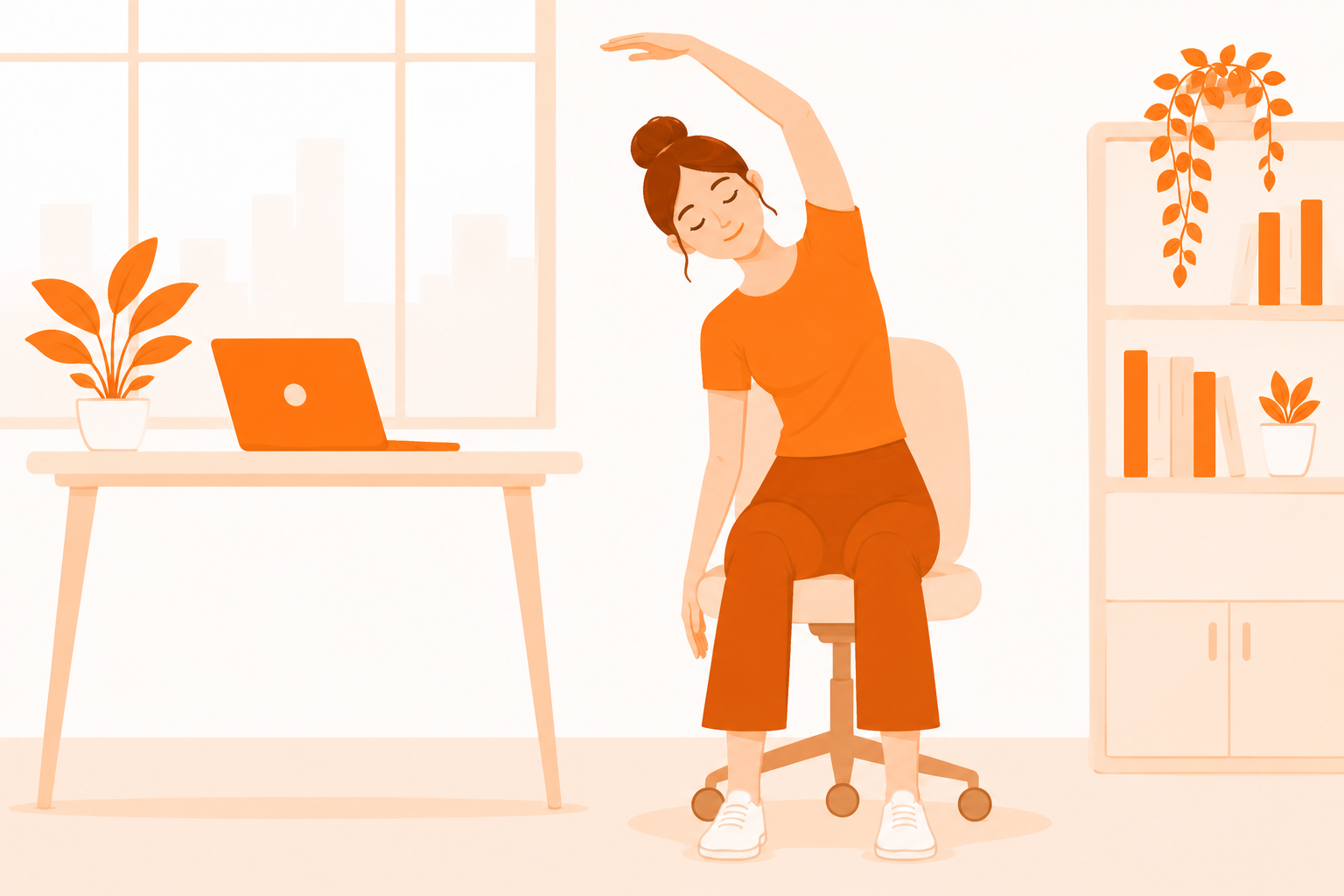
seated lateral bend
Seated Cat/Cow: Alternate between gently rounding your spine and opening your chest.
Seated Twist: Sit tall and slowly rotate your torso to one side, then the other.
Seated Lateral Bend: Reach one arm overhead and gently lean to the opposite side, creating space through your side body.
Move slowly and comfortably, keeping your feet grounded when possible.
Don't forget to incorporate your breath with your movement. Inhaling as you open or lengthen and exhaling as you soften into a movement can help create a calming rhythm.
Challenge: To go deeper at the end of your movement try an extra breath in and out.
3. Lower Your Stress With a 4-Count Breath
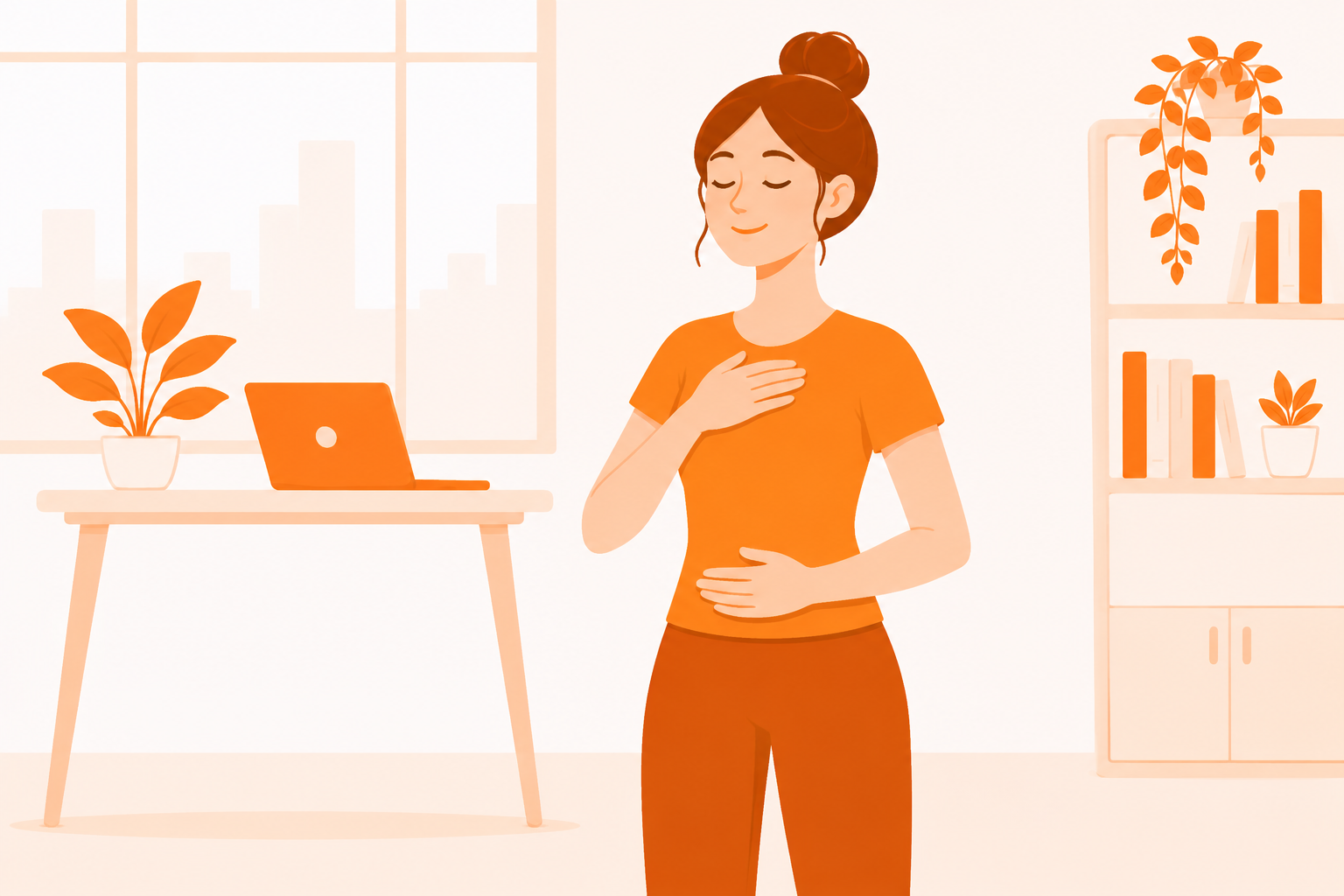
4 Count Breath
Your breathing is closely connected to your autonomic nervous system, which helps regulate your body's stress and relaxation responses.
Taking a moment to slow your breathing can encourage a shift toward a calmer, more relaxed state.
Try this simple breathing exercise:
Sit comfortably or stand with your feet on the floor.
Inhale into your belly gently through your nose for 4 counts.
Exhale slowly for 4 counts.
Repeat for several comfortable breathing cycles.
Keep your breathing natural and relaxed rather than forcing a deep breath.
Practice this a few times throughout the day, especially when you notice tension building.
Challenge: Hold your breath for a 4 count after your inhalation and exhalation to make it a box breath.
Small Changes Add Up
Stress relief doesn't always require a long yoga session or a complete change in your routine. Sometimes, it's as simple as relaxing your shoulders, moving your spine, or taking four intentional breaths.
Remember: Reset your posture. Find movement. Breathe with intention.
At Redding Chiropractic, we believe that improving how you move and increasing awareness of your body can make a meaningful difference in how you feel throughout your day.
Dr. Caitlin Redding, DC